Why breaking tasks into parts is essential for effective planning
Dividing long tasks into specific parts scheduled across individual days isn’t just practical — it’s one of the key principles of modern work planning. This approach is especially important in:
• service-based work,
• implementation projects,
• engineering environments,
• single-unit production,
• project-based workflows.
This method is considered a best operational practice because it allows teams to plan work realistically, taking into account actual resource availability and the real execution time required for each stage.
Why does this approach make sense?
Most business tasks cannot be completed in a single day. Typical examples of multi-hour or multi-day work include:
• requirements analysis – 12 hours,
• technical design – 24 hours,
• system configuration – 16 hours,
• prototype production – 32 hours.
These tasks simply cannot be executed in one continuous session — they must be distributed over multiple days and scheduled according to the availability of the people responsible.
Daily breakdown is equally valuable for shorter tasks that take only a few hours but cannot be finished in one day because:
• you’re waiting for client feedback,
• you need information from a supplier,
• legal review is required,
• or the task depends on interactions with multiple stakeholders.
This is a very common scenario — the task itself is short, but it stretches across several days because progress depends on external factors.
ow does multi-day task planning look in practice? — example
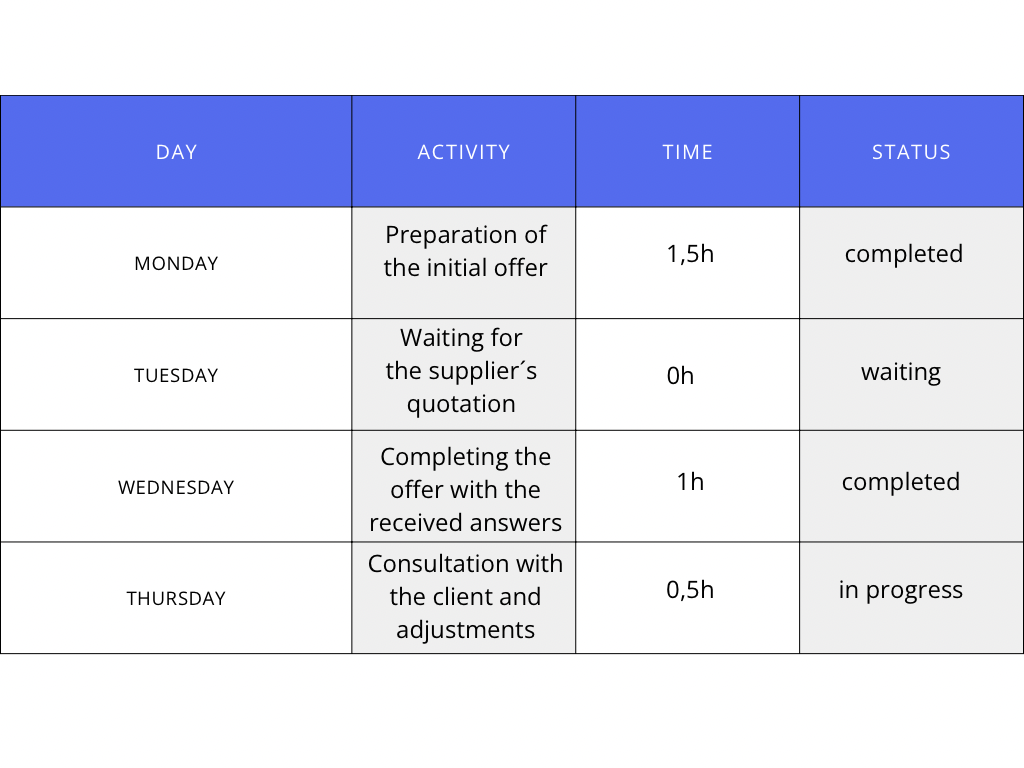
Benefits of breaking tasks into parts (day by day)
1. Full visibility of progress
You can see exactly what was completed each day — enabling early reaction before delays appear.
2. Better work organization
Each task has micro-stages, and the employee knows precisely what to do and when.
3. A realistic schedule
The plan reflects true availability and prevents overloaded days.
4. Clear visibility of continuation
The system shows on which days the task will continue and how the workload is distributed.
✔️ a detailed daily work plan for each task
✔️ employee workload shown day by day
✔️ real team availability (considering events, absences and existing tasks)
✔️ clear continuity of tasks across multiple days
✔️ the actual time required to complete the work
✔️ complete process transparency from start to finish
 .
.