Why Project Planning Fails – And How Realistic Project Planning Changes Everything
Project planning is often underestimated in business. It is treated as a personal habit rather than a strategic organizational capability. Yet effective project planning has a direct impact on team performance, delivery timelines, and the overall quality of project management.
Research in behavioral science and project management shows a strong connection between planning skills and productivity. Organizations that implement structured, time-based project planning consistently achieve better project performance, use resources more efficiently, and improve team efficiency.
The Hidden Problem with Traditional Project Planning
Most companies base their project planning on what appears to be a well-structured system — timelines, task lists, deadlines, and a carefully prepared project schedule.
On paper, everything works.
In reality, however, many projects fail because project planning is based on assumptions rather than real working conditions.
Plans are created without considering:
- team availability
- actual team workload
- parallel projects
- limited working time
The Gap Between “Paper Project Planning” and Real Work
- unlimited team availability
- uninterrupted workflow
- perfect time estimates
- full employee capacity
Every effective project planning process must consider:
- multiple projects running at the same time
- meetings and unexpected interruptions
- changing business priorities
- limited working hours per day
Why Project Planning Leads to Delays
The most common reasons include:
The Shift: From Static Plans to Realistic Project Planning
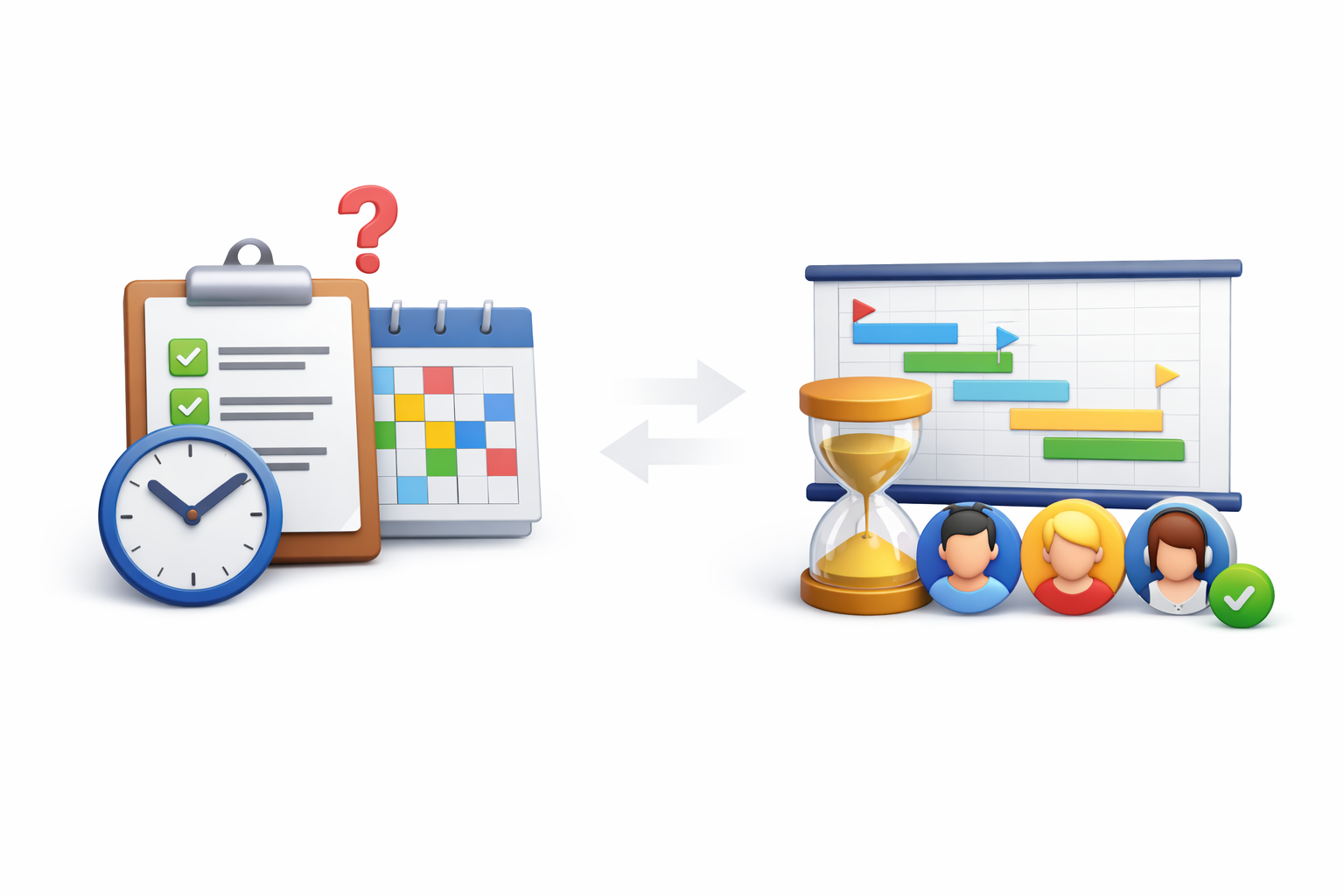
What Realistic Planning Looks Like in Practice
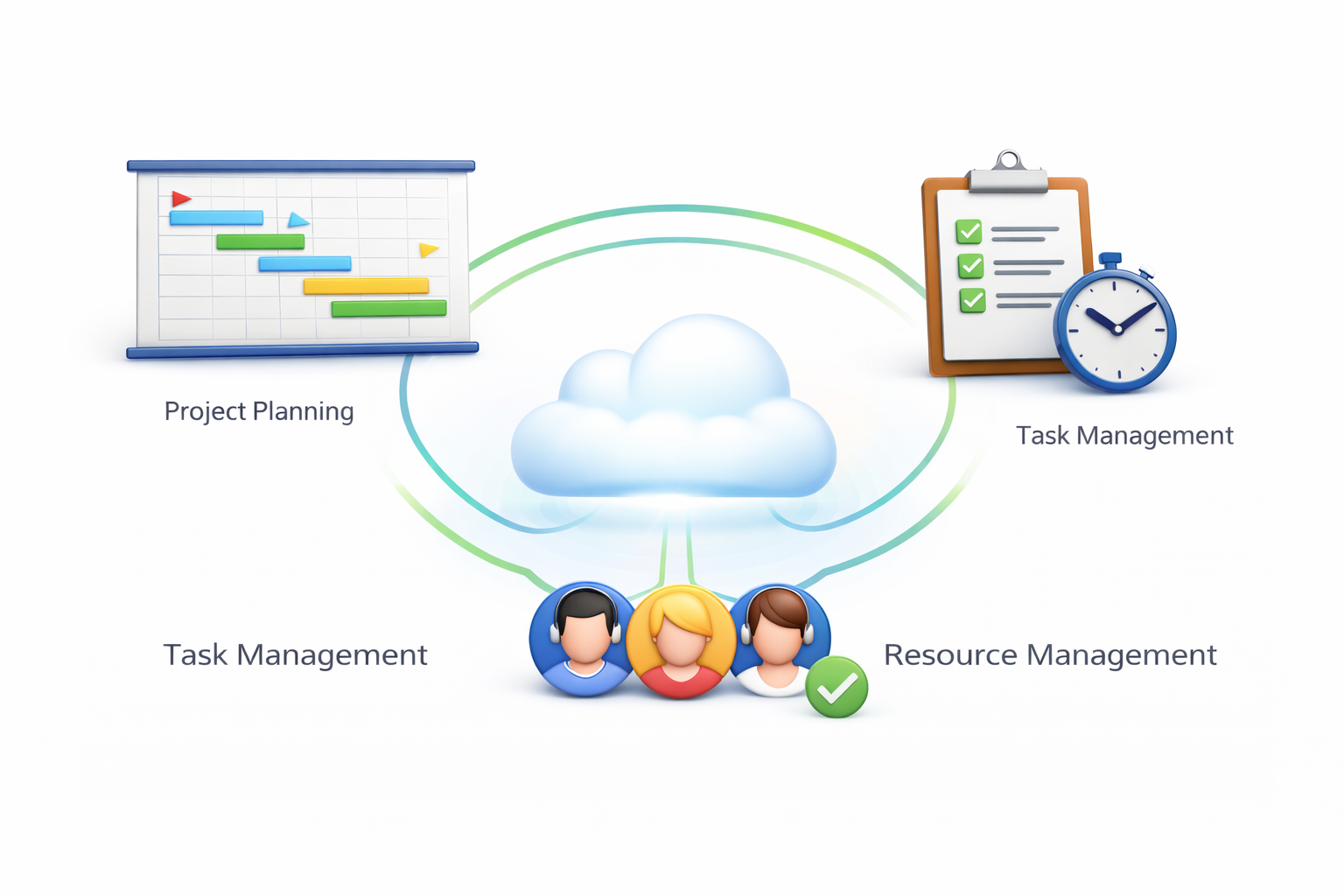
Real-Time Resource Management
Every task is planned based on actual team capacity — not assumptions. This turns resource management into a core part of the planning process.
Dynamic Project Scheduling
Project timelines adjust based on workload, priorities, and availability. This creates a living project timeline, not a static one.
Full Workflow Visibility
Teams gain complete visibility into:
- task execution
- delays and deviations
- workload distribution
This Is Where a Project Management Tool Makes the Difference
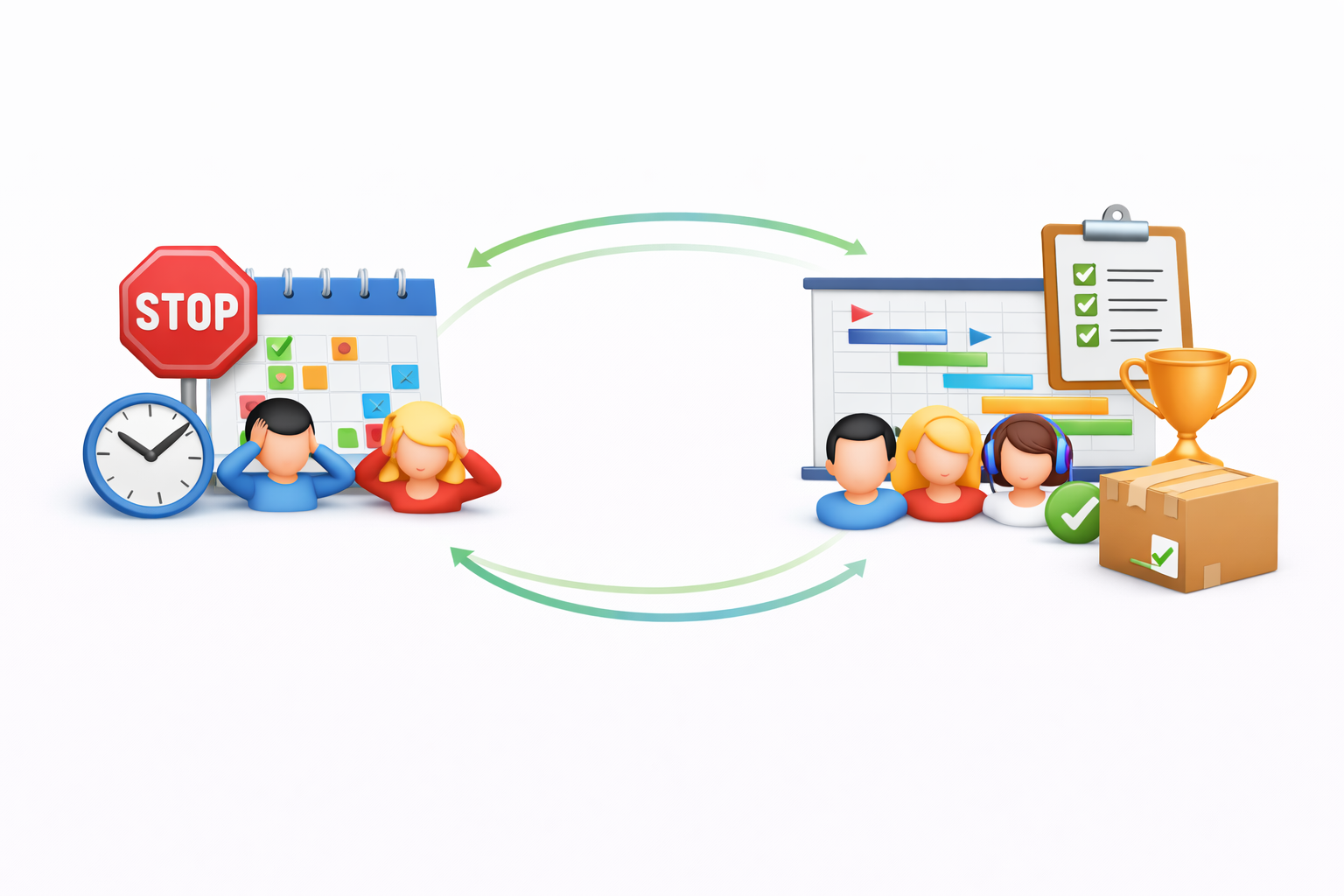
This approach fundamentally changes how project management works. Instead of treating time as a distant deadline, it allows tasks to be distributed across individual working days. As a result, project planning becomes practical and operational, and project progress becomes visible in real time.
Planning work day by day means that the available time of each team member is intentionally allocated to specific responsibilities. This gives the team a clear and realistic view of project execution, while project management shifts from assumptions and optimistic estimates to data-driven decision-making.
From Deadline Management to Time-Based Project Planning
As the number of tasks increases, managing projects becomes significantly more difficult. It becomes unclear how tasks are distributed in relation to the availability of the people responsible for completing them.
Allocating time for task execution on specific working days allows teams to systematically verify progress against the original project schedule and deadline. This time-based approach significantly improves team productivity and enables early detection of delays — before they become serious project risks.
Final Thoughts
The future of project management belongs to teams that plan based on reality, not assumptions.
And once you make that shift, everything changes.

 .
.